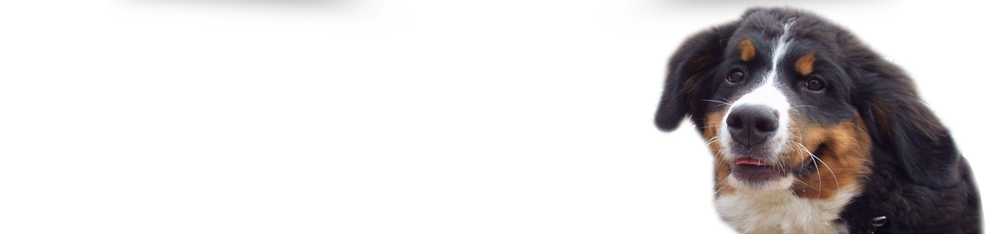

How to Calm an Overexcited Dog at Home
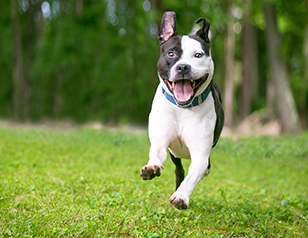
If your dog gets too excited at home, you are not alone. Jumping when guests arrive, barking indoors, sudden zoomies through the living room, or completely losing control when you walk through the door are all common situations.
For many owners, this feels overwhelming. It may even look like bad behaviour. In reality, overexcitement is often a lack of regulation. Your dog is not trying to misbehave. They simply have not yet learned how to manage their excitement in everyday situations.
Understanding this is the first step toward meaningful change.
Why Some Dogs Get Overexcited So Easily
Many owners wonder why dogs get overexcited, especially in normal home environments. Overexcited dog behaviour is rarely about disobedience or personality. More often, it reflects a regulation issue shaped by daily patterns and surroundings.
Dogs thrive on predictability. When routines change often, visitors come and go unpredictably, or activity levels fluctuate from calm to chaotic, excitement can build over time. A dog that gets too excited may not have learned how to settle after stimulation. Without consistent expectations, they struggle to shift from high energy to calm.
Environmental stimulation also plays a role. Noise in the home, children running, frequent arrivals and departures, or indoor play in small spaces can increase arousal. Emotional feedback from owners matters as well. If greetings are loud and animated one day but discouraged the next, the dog receives mixed signals.
For a dog that can’t control excitement, the issue is usually not stubbornness. It is a gradual buildup of unmanaged energy combined with unclear boundaries. Over time, that excitement becomes their default response to everyday events.
What Overexcitement Looks Like in Everyday Life
Overexcited dog behaviour often shows up in simple, daily moments.
Your dog gets too excited at home when someone knocks at the door. They jump repeatedly, bark nonstop, or race from room to room. When guests enter, they may ignore attempts to calm them and continue bouncing or vocalizing.
Some dogs experience indoor zoomies in tight spaces, knocking into furniture or people. Others struggle to settle after playtime or a walk. Even when the activity ends, their energy stays elevated.
A dog that can’t control excitement may appear unable to focus when stimulated. They might ignore familiar cues, pace the house, or demand attention long after the exciting event has passed.
This is not uncommon. Many households experience this daily. It is often misunderstood as defiance, when in fact it reflects difficulty regulating excitement within the home environment.
Why Consistency Matters More Than Quick Fixes
When owners search for how to calm an overexcited dog, they often look for a fast solution. Unfortunately, overexcited dog behaviour rarely changes with a single tip or short-term adjustment.
Dogs learn through repetition. If expectations shift from day to day, progress slows. For example, if one family member allows enthusiastic jumping while another discourages it, the dog receives mixed information. The result is confusion and continued excitement.
Increasing exercise alone does not always resolve the issue. While physical activity is important, it does not automatically teach regulation. A dog that gets too excited still needs consistent boundaries and predictable responses in daily situations.
Calm behaviour develops gradually. It comes from repeated patterns, clear leadership, and steady reinforcement of expectations over time. When routines feel stable and responses remain consistent, dogs begin to understand what is expected of them in moments of stimulation.
Quick fixes may offer temporary improvement, but lasting change comes from consistency in everyday life.
Helping an Overexcited Dog Learn to Settle
Learning how to calm an overexcited dog often begins with small, everyday adjustments rather than dramatic changes.
Predictable routines create security. When feeding times, walks, play, and quiet periods follow a general pattern, dogs begin to anticipate what comes next. This reduces the buildup of uncertainty that can contribute to overexcitement.
Clear expectations also matter. If calm behaviour is consistently acknowledged and excited behaviour is not unintentionally reinforced, dogs gradually begin to understand the difference. Over time, repeated patterns help a dog that can’t control excitement recognize when it is appropriate to relax.
Transitions between activities are especially important. Moving from play to quiet time should not feel abrupt or chaotic. Allowing space to decompress after stimulation helps lower arousal levels.
In everyday moments, leadership plays a quiet but steady role. When the household energy remains calm and predictable, dogs are more likely to mirror that stability. Calm behaviour is not created in a single session. It develops gradually through repetition, structure, and steady guidance within the home.
Common Mistakes That Keep Dogs Overexcited
Many owners unintentionally reinforce overexcited dog behaviour without realizing it.
Inconsistent rules are one of the most common issues. If jumping is ignored one day but encouraged the next, the dog receives unclear information. A dog that gets too excited may also be rewarded accidentally through attention, laughter, or physical interaction during excited moments.
Overstimulation without recovery time is another factor. Constant activity, frequent visitors, or high-energy play without quiet periods can make it difficult for a dog to settle.
Some owners also expect fast results. When progress is not immediate, frustration can set in. However, a dog that can’t settle is not choosing to ignore expectations. They are still learning how to regulate themselves.
Recognizing these patterns is not about blame. It is about understanding where change can begin.
When Overexcitement Becomes a Behaviour Issue
In some cases, overexcited dog behaviour begins to escalate. What once seemed manageable may start affecting safety or household harmony.
If a dog can’t control excitement to the point of knocking over children, injuring themselves, or showing signs of stress, it may indicate deeper behavioural issues in dogs. When consistency at home does not lead to improvement, additional guidance can be helpful.
For owners in Southern Ontario, Alpha Paws offers support through personalized programs focused on real-life situations. Learn more about addressing behaviour issues in dogs or explore options for in-home consultations designed to assess your dog within their everyday environment.
Seeking help is not a failure. It is often the next responsible step.
Calm Behaviour Is Learned Over Time
Overexcitement is common, especially in busy households. Progress is rarely perfectly linear, and setbacks can happen.
When learning how to calm an overexcited dog, the biggest shift often comes from realizing your dog is not being difficult. They are still learning how to regulate excitement in a busy human world.
Calm behaviour over time develops through consistency, structure, and steady leadership. For some dogs, additional support can make that process clearer and faster.
If you are ready to create a more balanced home environment, Alpha Paws is here to help with personalized guidance tailored to your dog and your household.